

EMG / Nerve Conduction Studies
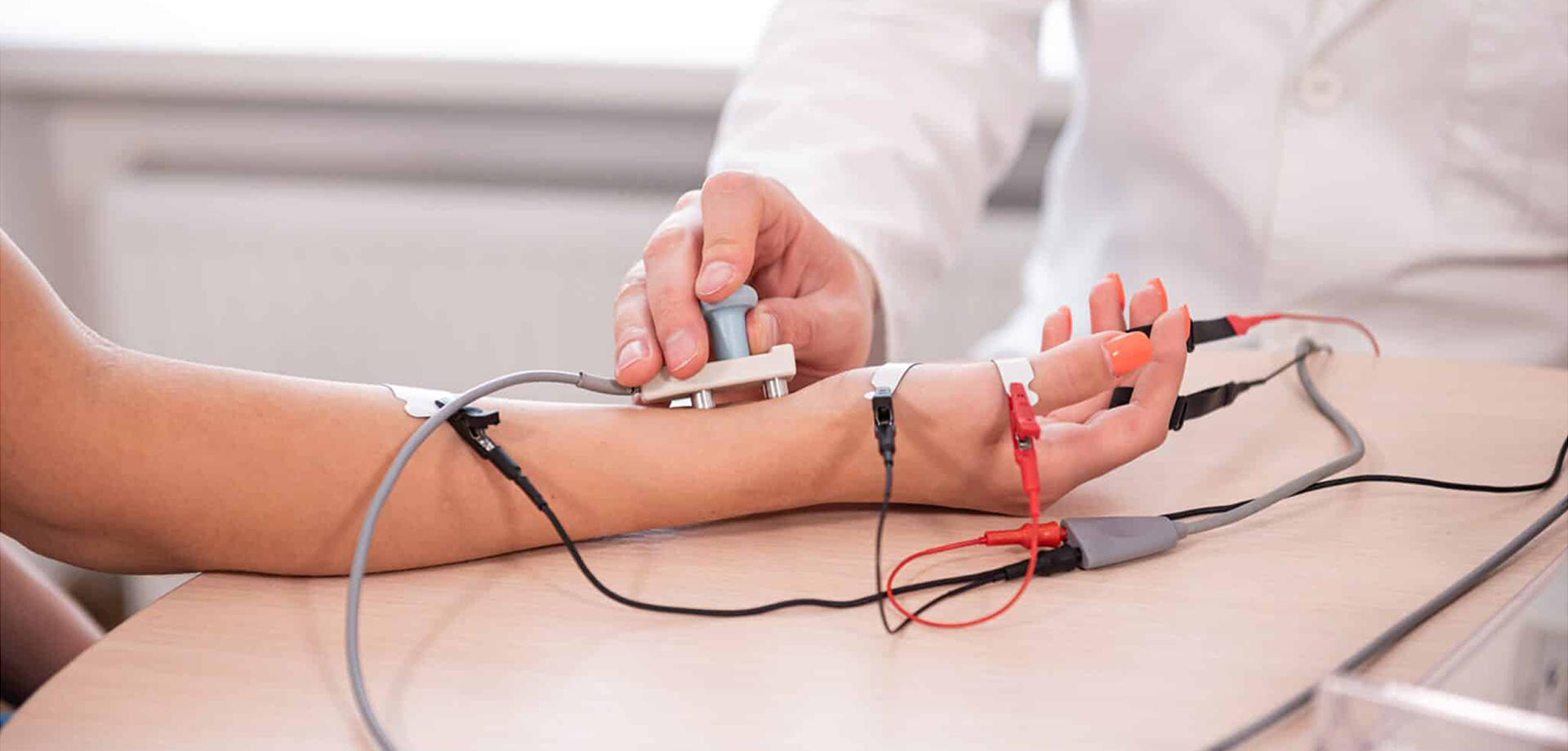
Electromyography (EMG) and Nerve Conduction Studies (NCS) are specialized neurophysiological tests used to evaluate disorders affecting peripheral nerves, muscles, and the neuromuscular junction. In Dubai and across the UAE, these diagnostic procedures are commonly performed in neurology departments to assess symptoms such as numbness, tingling, weakness, muscle cramps, radiating pain, or suspected neuropathy. Accurate nerve and muscle evaluation is essential for differentiating between central nervous system disorders and peripheral nerve conditions.
Nerve conduction studies measure how quickly electrical signals travel through peripheral nerves. Small surface electrodes are placed on the skin, and mild electrical impulses stimulate specific nerves. The response speed and amplitude provide valuable information about nerve integrity. Slowed conduction velocity may indicate nerve compression, demyelination, or peripheral neuropathy.
Electromyography involves inserting a very fine needle electrode into selected muscles to assess electrical activity at rest and during contraction. EMG helps identify muscle diseases, nerve root compression (radiculopathy), motor neuron disorders, and neuromuscular junction abnormalities. Though minimally uncomfortable, the procedure is generally well tolerated and performed on an outpatient basis.
These tests are particularly useful in diagnosing carpal tunnel syndrome, diabetic neuropathy, sciatica, cervical radiculopathy, myopathy, and conditions such as amyotrophic lateral sclerosis (ALS). In the UAE, where diabetes prevalence is high, EMG/NCS play a vital role in early detection of diabetic nerve damage.
Results are interpreted by experienced neurologists who correlate findings with clinical examination and imaging studies. Accurate diagnosis allows targeted treatment planning, whether medical therapy, physiotherapy, surgical referral, or lifestyle modification.
Safety and infection control standards are strictly maintained during testing. Complications are rare and typically limited to mild temporary discomfort or minor bruising.
EMG and nerve conduction studies remain indispensable tools in modern neurology. By providing objective assessment of nerve and muscle function, these tests support precise diagnosis and effective management of peripheral neurological disorders.
Nerve conduction studies measure how quickly electrical signals travel through peripheral nerves. Small surface electrodes are placed on the skin, and mild electrical impulses stimulate specific nerves. The response speed and amplitude provide valuable information about nerve integrity. Slowed conduction velocity may indicate nerve compression, demyelination, or peripheral neuropathy.
Electromyography involves inserting a very fine needle electrode into selected muscles to assess electrical activity at rest and during contraction. EMG helps identify muscle diseases, nerve root compression (radiculopathy), motor neuron disorders, and neuromuscular junction abnormalities. Though minimally uncomfortable, the procedure is generally well tolerated and performed on an outpatient basis.
These tests are particularly useful in diagnosing carpal tunnel syndrome, diabetic neuropathy, sciatica, cervical radiculopathy, myopathy, and conditions such as amyotrophic lateral sclerosis (ALS). In the UAE, where diabetes prevalence is high, EMG/NCS play a vital role in early detection of diabetic nerve damage.
Results are interpreted by experienced neurologists who correlate findings with clinical examination and imaging studies. Accurate diagnosis allows targeted treatment planning, whether medical therapy, physiotherapy, surgical referral, or lifestyle modification.
Safety and infection control standards are strictly maintained during testing. Complications are rare and typically limited to mild temporary discomfort or minor bruising.
EMG and nerve conduction studies remain indispensable tools in modern neurology. By providing objective assessment of nerve and muscle function, these tests support precise diagnosis and effective management of peripheral neurological disorders.
Quick Contact
If you have any questions simply use the following contact details.

Working Hours
-
Out-patient Department
Monday to Saturday 08:00 AM - 09:00 PM
Sunday 10:00 AM - 06:00 PM
-
Emergency Department & Pharmacy
Sunday to Saturday 24x7



Book Appointments, Inquire, or Manage Your Care Easily – Get in Touch via
 04 406 3000
  04 406 3000
Quick Links
Legal
Working Hours
-
Out-patient Department
Monday to Saturday | 8 AM to 9 PM
Sunday | 10 AM to 6 PM
Emergency Department & Pharmacy | 24x7
Connect with us!




©2026 IMH. All Rights Reserved. Ministry of Health License No : YP7TYZVC-090326